
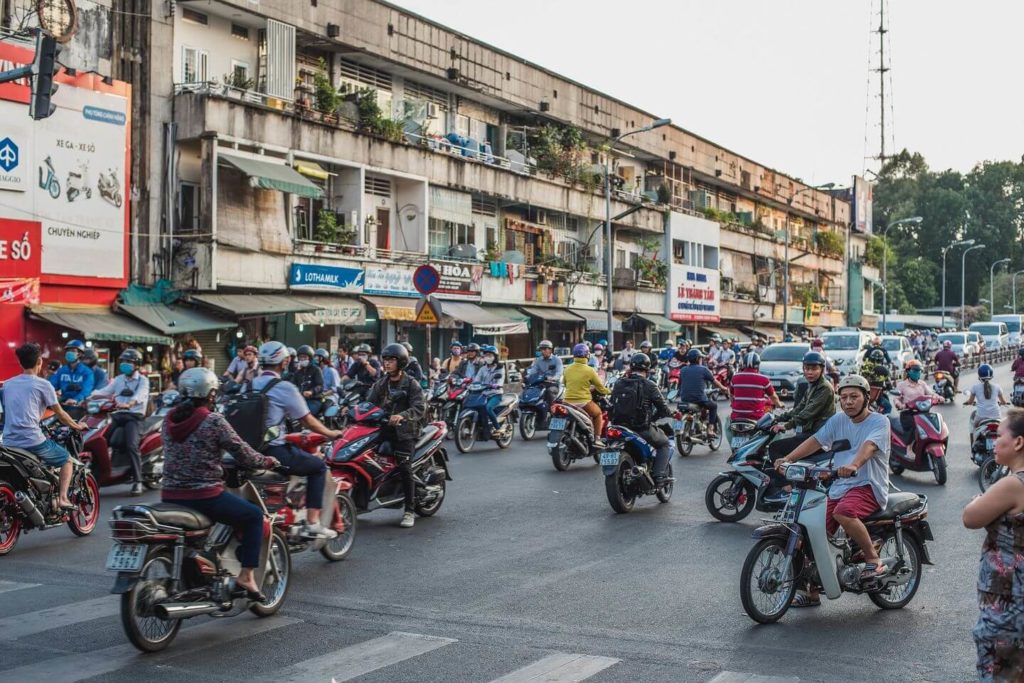
The first thing many visitors notice about Vietnam is movement. Motorbikes flow through intersections in seemingly impossible numbers. A woman carrying baskets of fruit steps between them without appearing hurried. Someone is washing herbs on the pavement beside a café where half a dozen people sit on stools hardly taller than a stack of books. From somewhere nearby comes the metallic scrape of a rolling shop door, the smell of grilled pork, the call of a street vendor, and the impatient but strangely ordinary chorus of horns. It can feel overwhelming for several minutes. Then, if you stay still long enough, patterns begin to emerge.
That is a useful way to approach Vietnam as a whole.
For a first-time visitor, Vietnam is generally an accessible country to travel through, but it is not always immediately legible. Things that appear chaotic may follow rules that locals understand instinctively. Questions that sound unusually personal may be ordinary attempts at conversation. A building that looks like a historical monument may still be an active place of worship. A pavement may be a walkway in the morning, a restaurant at noon, a motorbike park in the afternoon, and a gathering place after sunset. Vietnam rewards visitors who resist the temptation to decide too quickly what something means.
You do not need to arrive knowing every custom. You do, however, benefit from knowing where to look.
Vietnam Is Many Vietnams
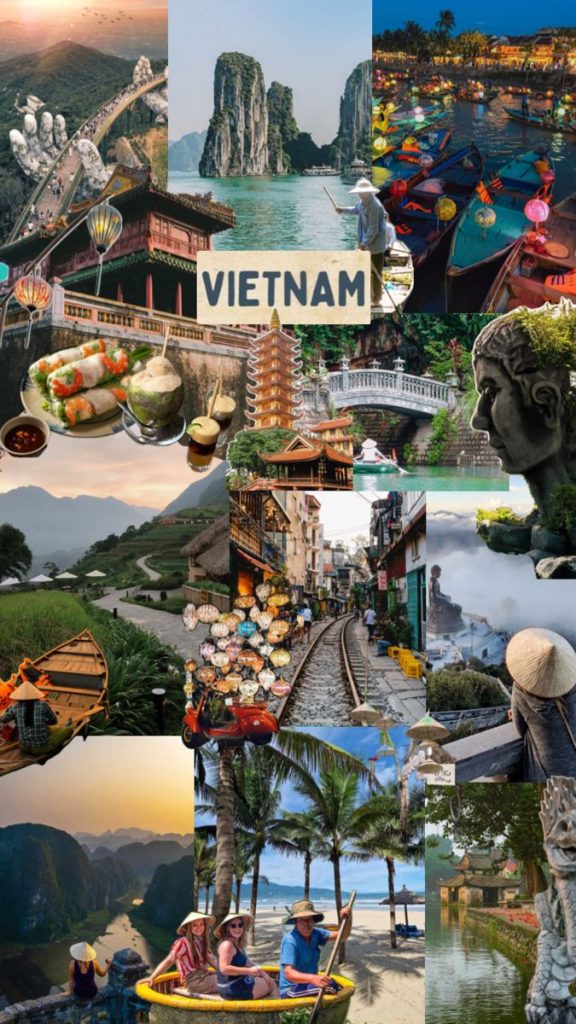
On a map, Vietnam appears as a narrow country stretched along the eastern edge of mainland Southeast Asia. On the ground, distances translate into striking differences in climate, food, speech, architecture and habits of daily life. A journey from Hanoi to Huế, and then from Huế to Ho Chi Minh City, is not merely a movement between cities. It is a movement between regional worlds.
Northern food is not identical to southern food. The rhythm of Hanoi is not the rhythm of Ho Chi Minh City. Central Vietnam carries cultural and historical traditions shaped by imperial Huế, the trading ports of Hội An, the former kingdoms of Champa and generations of communities living between mountains and sea. Even within these broad regions, local differences quickly multiply. Vietnam’s official tourism materials themselves divide food and travel experiences by region because local ingredients, tastes and culinary traditions vary significantly across the country.
The weather follows the same principle. It is a mistake to imagine that because one part of Vietnam is warm and sunny, the rest must be the same. Northern Vietnam can have cool winters, mountainous areas can become genuinely cold, and the rainy seasons of central and southern Vietnam do not follow precisely the same timetable. Vietnam’s long geography produces several distinct climate patterns, including both tropical and more temperate conditions.
This matters practically, but it also matters culturally. Foreign visitors sometimes arrive expecting to find a single, easily summarized “Vietnamese culture.” What they encounter instead is a country held together by a shared national history while still containing powerful regional identities. The differences are part of the experience, not deviations from it.
The Street Has Its Own Logic
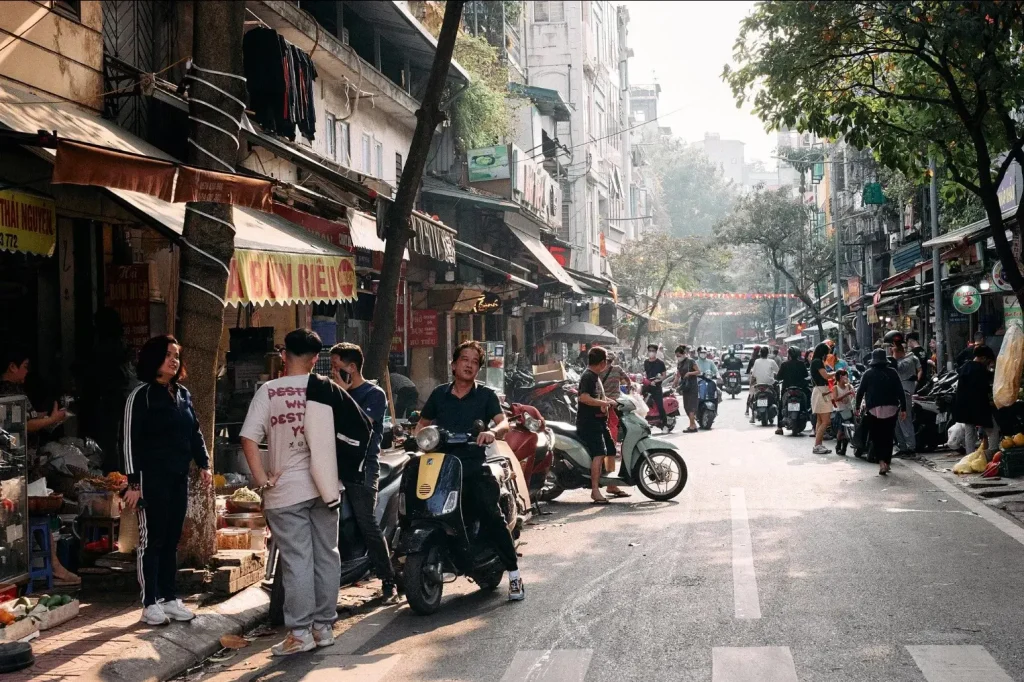
Perhaps nowhere is the temptation to judge too quickly stronger than on a Vietnamese street.
To someone arriving from a city where traffic lanes are rigidly separated and sidewalks are kept mostly clear, central Hanoi or Ho Chi Minh City can appear to be operating under a collective suspension of traffic law. Motorbikes fill spaces that a visitor did not realize were spaces. Riders merge from side streets. Cars, buses, bicycles and pedestrians negotiate intersections together. Horns sound frequently, yet the emotional temperature of the street can be much lower than the noise suggests.
A horn in Vietnam does not always carry the aggressive meaning it might carry elsewhere. Often it simply announces presence. The larger lesson is not that visitors should imitate local riders or stride fearlessly into traffic. They should not. Use crossings where available, watch signals, remain predictable, and give yourself time. The important cultural observation is that Vietnamese urban traffic depends heavily on constant awareness of other people’s movement.
The sidewalk is equally revealing. Official Vietnamese tourism writing describes sidewalks as places where people eat, drink coffee, meet, shop and conduct everyday business, and anyone who spends time in Vietnamese cities quickly understands why. A pavement may contain a tea stall, parked motorbikes, a barber, baskets of vegetables and a row of diners eating noodles. In many neighborhoods, the border between private business and public street life is surprisingly fluid.
Rather than seeing this merely as disorder, it is more illuminating to see the street as one of Vietnam’s great social spaces. Much of everyday life takes place where strangers can see it.
Eat Before You Try to Understand the Menu
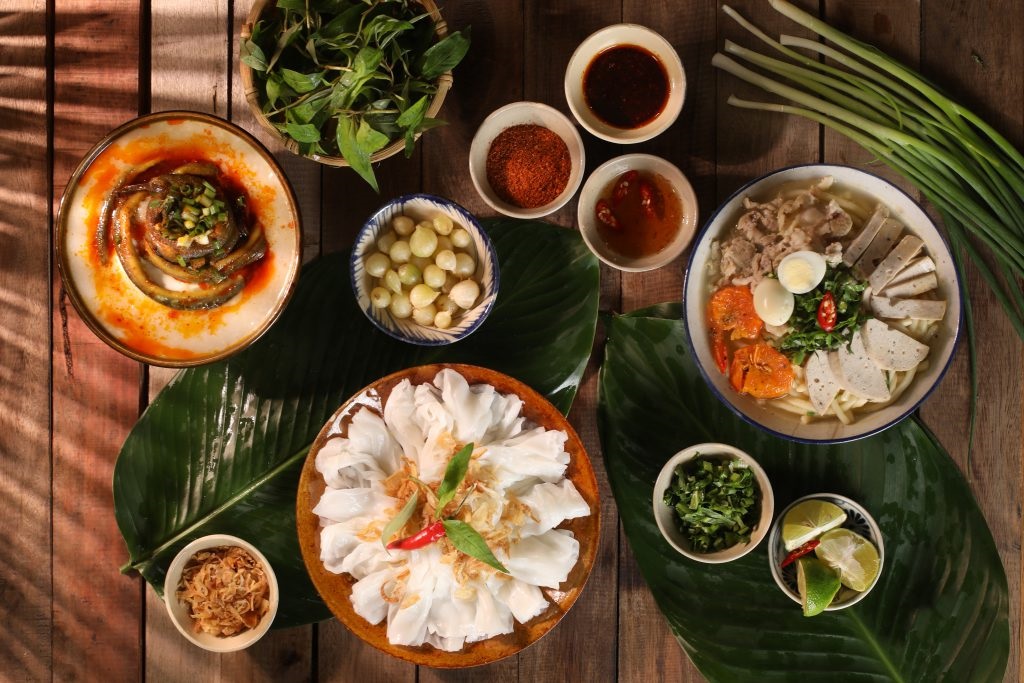
Food is one of the easiest ways into Vietnam and one of the fastest ways to discover how misleading generalizations can be.
Phở may be famous internationally, but it represents only a small corner of Vietnamese cooking. Travel from one region to another and the flavors shift. Noodles change. Herbs change. Breakfast changes. The same dish may become sweeter, saltier, spicier or more restrained depending on where it is prepared. Regional variation is so extensive that eating becomes a form of geographical education.
First-time visitors sometimes hesitate when approaching a tiny street stall because the procedures are unclear. Yet street-food customs are often simpler than they look. Vietnam’s official tourism guidance describes the atmosphere as informal and forgiving to newcomers. In many small establishments you order, find a stool or table, eat, and pay afterward. Watch what other customers do and follow their rhythm.
If you are invited to a family meal, another aspect of Vietnamese eating becomes visible. Meals are often organized around shared dishes rather than individually composed plates. Rice provides the base while several dishes are placed in the middle of the table. Eating, passing food and talking occur together. The meal is not simply the delivery system for the food.
You do not need perfect chopstick technique. You do not need to recognize every herb. You certainly do not need to prove your courage by eating something you genuinely do not want. Curiosity is more useful than performance. Ask what a dish is, try a little, and notice how people combine ingredients. Vietnamese cuisine makes more sense when eaten as Vietnamese people eat it rather than when reduced to a list of famous dishes.
Politeness May Look Different From What You Expect
Visitors often arrive with a set of social instincts learned somewhere else. Those instincts do not disappear at immigration control, and most of the time they work perfectly well. Kindness, patience and respect travel reasonably well across cultures. Some situations, however, benefit from a little interpretation.
Open confrontation can be uncomfortable in many Vietnamese social settings. Raising your voice at a hotel employee, driver, waiter or shopkeeper may achieve less than a calm conversation because public embarrassment can make disagreement harder to resolve. Vietnam’s official tourism guidance specifically advises travelers to be mindful of “face” and to avoid loud public arguments.
This does not mean Vietnamese people never disagree loudly, nor does it mean everyone communicates indirectly. No society is that simple. It means that maintaining dignity in social interactions can matter, and a visitor usually gains more by approaching a problem as something to solve together than as a contest to win.
A smile can also carry more meanings than amusement. It may express friendliness, embarrassment, uncertainty or an attempt to soften an awkward moment. Again, context matters more than any single rule.
What may surprise English speakers most is the Vietnamese system of address. Ordinary Vietnamese conversation frequently uses kinship terms such as anh, chị, em, cô, chú and bác in situations where English would simply use “you” or a person’s name. Linguistic research notes that Vietnamese terms of address draw extensively from kinship vocabulary and can encode distinctions involving age, gender and social relationship even between people who are not related.
This helps explain another experience visitors sometimes find unexpected.
Someone May Ask How Old You Are
A new acquaintance in Vietnam may ask your age surprisingly early in a conversation. You may also be asked whether you are married, whether you have children, what work you do, or where your family lives. Depending on where you come from, some of these questions may feel more personal than expected.
Age in particular has a practical linguistic function because it helps speakers decide how to address one another. Vietnamese does not provide the same socially neutral “I” and “you” that English speakers can use almost everywhere. Relative age can influence which form of address feels natural.
This does not mean you must answer every question. A visitor is always entitled to maintain personal boundaries. It is simply helpful to recognize that the person asking may not be trying to intrude in the way the same question might suggest in another cultural context.
One of the pleasures of traveling in Vietnam is that conversations can begin with very little ceremony. A person at the next café table may ask where you are from. A driver may want to know whether you have children. A market seller may ask how long you have been in Vietnam. Sometimes it is curiosity. Sometimes it is friendliness. Sometimes it is simply something to talk about while waiting.
Family Is Present Even When You Cannot See It
Walk into a Vietnamese home and you may notice an altar placed prominently against a wall. Look carefully inside a small shop, restaurant or office and you may encounter another, sometimes decorated with photographs, flowers, fruit, incense or offerings. To a visitor unfamiliar with Vietnamese religious life, such altars can be easy to overlook. To the family or business owner, they may connect the living household with generations no longer physically present.
Ancestor remembrance is deeply woven into Vietnamese cultural life. UNESCO’s documentation of Vietnamese intangible heritage repeatedly notes the continuing importance of ancestor worship, including traditions associated with the Hùng Kings and Xoan singing in Phú Thọ. During Tết, family reunion and remembrance of ancestors become especially visible, with household altars, grave visits and offerings forming part of the holiday’s ritual life.
For a visitor, the practical rule is simple. Treat an altar as a meaningful space rather than decoration. Do not move objects casually, lean against it, step over offerings placed low to the ground, or turn religious objects into comic photo props.
The deeper lesson is more interesting. In Vietnam, family is not always confined to the living members sitting around a table. The presence of ancestors helps explain why family history, hometowns, graves, death anniversaries and ancestral houses can carry such emotional weight.
A Pagoda Is Not Simply an Old Building
Vietnam’s religious landscape can be confusing at first because English translations flatten distinctions that Vietnamese speakers recognize more readily. A chùa is generally associated with Buddhism. A đình is traditionally a communal house connected with village ritual and tutelary spirits. A đền is commonly a temple dedicated to historical figures, deities or other sacred beings. Shrines and family temples add further layers.
For a first visit, you do not need to master the entire vocabulary. You do need to remember that many places tourists visit for their architecture are still being used for worship.
That changes how you enter them.
Official Vietnamese tourism guidance advises modest clothing at temples and pagodas, with shoulders and legs covered, hats removed, and shoes removed where required. It gives similar advice about removing shoes when entering Vietnamese homes. Local practice varies from site to site, so watching signs and observing what worshippers do is often the best guide.
Photography deserves the same sensitivity. An incense-filled ceremony is not automatically a performance arranged for visitors. A person praying is not part of the décor. An altar crowded with offerings may be more culturally significant than the carved roof that drew you through the gate.
There is no need to become nervous about making a mistake. Vietnamese sacred places receive enormous numbers of visitors. Quiet attention and ordinary respect usually carry you a long way.
Money Looks More Complicated Than It Is
The first encounter with Vietnamese đồng can make almost anyone feel temporarily wealthy. Prices are commonly expressed in thousands, tens of thousands and hundreds of thousands of đồng, so a perfectly ordinary meal may produce a bill containing more zeros than many visitors are accustomed to seeing.
Take a little time with banknotes, especially during your first days. Some denominations can appear similar when handled quickly. Smaller shops and street vendors may prefer cash, while cards and electronic payments are increasingly common in hotels, larger restaurants, shopping centers and many urban businesses.
Bargaining deserves a little cultural judgment. Markets, tourist stalls and some informal shops may allow negotiation. Supermarkets, convenience stores, restaurants with printed prices, museums and most modern retail shops do not. Bargaining works best when treated as a conversation rather than combat. Ask the price, decide what the object is worth to you, make a reasonable counteroffer if the situation allows it, and remain good-humored.
Winning a five-minute argument over an amount that is insignificant to you rarely improves a journey.
Morning May Become Your Favorite Time of Day
Visitors who sleep late can spend weeks in Vietnam without seeing one of its most appealing daily transformations.
Go outside around dawn and the city belongs to a different population. Markets are already active. Breakfast stalls are steaming. Schoolchildren appear in uniforms. Older people walk around lakes and exercise in parks. Workers arrange tiny chairs beside tea stalls. Deliveries arrive before the heat intensifies and traffic thickens.
Vietnamese cities can be energetic late into the evening, but they also begin early. Morning reveals routines that disappear once tourist attractions open their gates.
It is also an ideal time to understand that Vietnamese breakfast has little interest in Western categories. Soup is breakfast. Rice can be breakfast. Noodles are breakfast. Bánh mì is breakfast. A food does not need to be sweet, light or accompanied by orange juice to belong to the morning.
Find a busy local stall, sit down and watch the neighborhood wake up.
Coffee Is a Way of Occupying Time
Coffee entered Vietnam from abroad, but Vietnamese people made it unmistakably their own. Today traditional sidewalk cafés coexist with contemporary specialty shops, and the familiar metal phin filter remains one of the most recognizable ways of preparing Vietnamese coffee.
For the visitor, however, the cultural significance of coffee is not only in the bean or the brewing method. It is in the sitting.
Vietnamese tourism writing describes coffee as part of sidewalk social life, where people can spend long stretches talking and watching the street. The tiny chair that initially looks uncomfortable begins to make sense when you realize that the street itself is part of the café.
Try cà phê sữa đá, strong coffee with condensed milk and ice. Try egg coffee in Hanoi, or bạc xỉu if you prefer something milkier. But at least once, resist the instinct to finish quickly and leave. Sit long enough for nothing in particular to happen.
That may be the point.
A Few Vietnamese Words Can Open a Door
Vietnamese pronunciation can intimidate newcomers. It is tonal, and a syllable pronounced with the wrong tone can become another word entirely. Nobody expects a first-time visitor to master this in a few days.
Learn a little anyway.
Cảm ơn means thank you. Xin lỗi can mean sorry or excuse me. Ngon means delicious. Bao nhiêu? asks how much. Dạ is one of those small Vietnamese words that is difficult to translate perfectly but often communicates respectful acknowledgement, particularly toward an older person or someone deserving deference.
You may discover that xin chào, the phrase most phrasebooks teach first, is less useful in ordinary conversation than expected because Vietnamese greetings and forms of address are relational. Vietnamese speakers frequently address people through kinship-based terms rather than a universal equivalent of “you.”
Do not worry about sounding perfect. Language can function as a gesture before it functions as a skill. A few imperfect Vietnamese words tell someone that you are willing to meet the country halfway.
The Past Is Usually Nearby
Vietnam becomes more interesting when you learn to notice how often history occupies the same space as ordinary life.
In Hanoi, streets wind around temples, French colonial buildings, socialist monuments, old merchant neighborhoods and fragments of an imperial capital. The Imperial Citadel of Thăng Long reaches back into the dynastic history of the city, while the nearby Temple of Literature was founded in the eleventh century. In Huế, Nguyễn dynasty architecture stands beside neighborhoods where people go to work and school. In Hội An, centuries of maritime exchange remain visible in the architecture of an urban community that is still inhabited. Elsewhere, Cham towers, village communal houses, war memorials and ancestral halls appear in landscapes that are otherwise entirely contemporary.
The effect can be subtle. Vietnam rarely presents its past as a single preserved historical layer sealed behind museum glass. Different periods overlap.
This is one reason a small amount of historical knowledge changes a trip dramatically. A river becomes more than a river when you know armies once fought there. A citadel gate becomes more than a photo backdrop when you understand the state that built it. A family temple becomes easier to appreciate when you understand the importance of ancestors.
Before arriving, you do not need to memorize a succession of kings. Knowing the broad shape of the story is enough to begin.
War Is Part of Vietnam’s History but It Is Not All of It
For many foreigners, particularly visitors from the United States, France and Australia, Vietnam first entered their historical imagination through twentieth-century war. That makes war museums, tunnels, former battlefields and memorials natural destinations.
They should be visited thoughtfully.
The events called the Vietnam War in much of the English-speaking world are remembered and named differently within Vietnam, where historical narratives are shaped by experiences of colonial rule, national division, revolutionary struggle and reunification. Foreign visitors do not need to agree with every interpretation they encounter. They should recognize that they are entering another society’s landscape of memory rather than a historical theme park.
The most useful habit is to listen before comparing. Read museum labels. Notice which stories are emphasized. Notice what is absent. Ask how the same event may have been experienced by soldiers, civilians, families in different regions and Vietnamese communities outside the country.
Most importantly, do not allow the war to become the only lens through which you see Vietnam. The country existed for centuries before the twentieth-century conflicts and has lived for decades beyond them. A visitor who sees only bunkers and battlefields will leave knowing something about Vietnam, but also having missed a great deal of it.
Famous Vietnam and Everyday Vietnam Are Not the Same Thing
Tourism inevitably concentrates experience. Hanoi becomes the Old Quarter. Central Vietnam becomes Hội An. Ho Chi Minh City becomes a handful of central districts. Beaches, caves, lanterns and rice terraces become visual shorthand for an entire country.
There is nothing wrong with seeing famous places. They became famous for reasons.
But leave some room for the ordinary.
Walk through a neighborhood without searching for an attraction. Visit a local market in the morning. Sit in a café facing the street rather than the interior. Look at what people buy, what children eat after school, where older people gather, what appears on household altars, and how a residential lane changes between morning and evening.
Vietnamese life often becomes most understandable when nobody is performing Vietnam for you.
Check the Rules Before You Fly
Culture changes slowly. Immigration rules can change much faster.
Before traveling, check your passport validity, visa requirements, permitted entry points, health insurance, medication documentation and any other entry conditions that apply to your nationality. Do this through official sources rather than assuming that an old travel blog or social-media post remains accurate.
As of August 2026, Vietnam’s Immigration Department states that its electronic visa can be valid for up to 90 days and may allow single or multiple entries, depending on the visa issued. Requirements and eligibility should still be checked directly through the official National Electronic Visa system before travel.
The same caution applies to weather. Vietnam is too geographically varied for a single nationwide packing rule, so check the regions you are actually visiting rather than searching only for “Vietnam weather.”
The point of preparation is not to eliminate uncertainty. Travel would be very dull if it did. It is simply to remove the avoidable problems so that you have more attention left for everything else.
Arrive Ready to Notice
Perhaps the most useful thing to bring to Vietnam is not a phrasebook, a particular pair of shoes, or a list of restaurants. It is the willingness to delay judgment.
When a street seems chaotic, watch how people move through it. When someone asks a question that feels unexpectedly personal, consider whether the social meaning might be different. When you enter a temple, remember that another person has entered to pray. When a meal arrives with ingredients you cannot identify, ask before deciding that you will not like them. When you encounter an account of history different from the one you learned at school, listen long enough to understand why it is being told that way.
Vietnam does not reveal itself all at once.
It appears gradually in the grandmother arranging fruit on an ancestral altar behind a shop counter, in the office worker eating noodles before seven in the morning, in the family sharing dishes around a table, in the teenager carrying coffee through a lane lined with buildings older than her grandparents, and in the quiet coexistence of things that initially seem contradictory — ancient temples and glass towers, Confucian forms of address and global popular culture, village traditions and some of Southeast Asia’s fastest-changing cities.
You will not understand all of it on your first journey.
You are not supposed to.
The best way to begin understanding Vietnam is not to arrive knowing everything, but to arrive ready to notice.